Newsletter Subscribe
Enter your email address below and subscribe to our newsletter


 Byjohn A
Blockchain technology underpins crypto by recording transactions on a distributed, immutable ledger. Blocks bundle validated operations and link cryptographically to prior blocks, creating a tamper-evident history. Consensus mechanisms align participants without a central authority, trading decentralization for performance and resilience. Rewards incentivize participation, yet openness raises privacy and security trade-offs. Governance, disclosure, and scrutiny of assumptions remain critical; the promises imply trade-offs that demand careful evaluation as complexities accumulate.
Blockchain underpins the reliability and efficiency of everyday crypto by providing a decentralized ledger that records transactions immutably and transparently.
The system enables predictable, auditable flows, yet remains vulnerable to misinterpretation of incentives.
Block rewards drive participation, while transaction privacy is contested; skepticism is warranted regarding scalability, centralization risks, and the balance between openness and user autonomy in decentralized markets.
The system’s security rests on how blocks, ledgers, and hashes work together to constrain and verify the state of transactions. In practice, block validation enforces transaction legitimacy and ordering, while hash integrity binds blocks to prior history, preventing undetected tampering. Skeptical scrutiny reveals potential gaps: reliance on cryptographic assumptions, implementation flaws, and the risk of unseen intermediate exploits undermining trust.
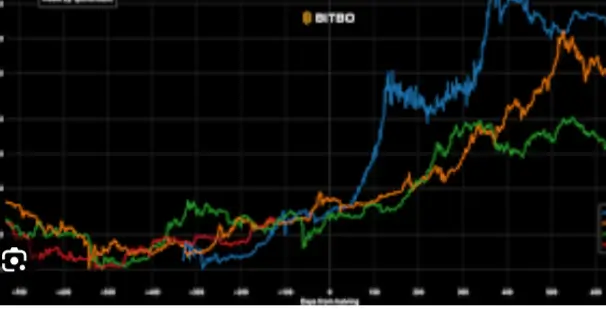
See also:Understanding Bitcoin Market Cycles
Consensus and decentralization form the core mechanism by which trust is established in crypto systems: trust arises not from a central authority but from distributed agreement among participants.
This analysis evaluates consensus mechanisms, highlighting decentralization tradeoffs and disclosure considerations.
It emphasizes skepticism toward assumed transparency, while addressing trust models and governance structures as two-word discussion ideas guiding user autonomy and systemic resilience without privileging any single entity.
Comparing blockchains requires a concise framing of the core differences in architecture, governance, and performance, and an assessment of how these factors translate into practical evaluation criteria.
The analysis emphasizes modularity, consensus assumptions, and upgrade paths, highlighting tradeoffs between security models and throughput.
Consider blockchain scalability and cryptographic algorithms to judge interoperability, resilience, and long-term viability rather than superficial feature parity alone.
Blockchain technology offers a rigorous framework for recording and validating transactions, yet its promises require careful scrutiny. The architecture—blocks, ledgers, hashes, and consensus—provides tamper-resistance and decentralization, but not infallible security or universal transparency. Trade-offs between openness and privacy persist, along with governance and incentive challenges. In short, the system behaves like a complex instrument: powerful in principle, but its reliability hinges on assumptions, implementation detail, and ongoing evaluation by skeptical, methodical observers.